
Trails guide career: FGASA hours, rifle rules and walking jobs
FGASA's trails ladder needs at least 200 logged hours and 60 dangerous game encounters, and one lead trails ad paid R15,000 to R17,500 monthly.
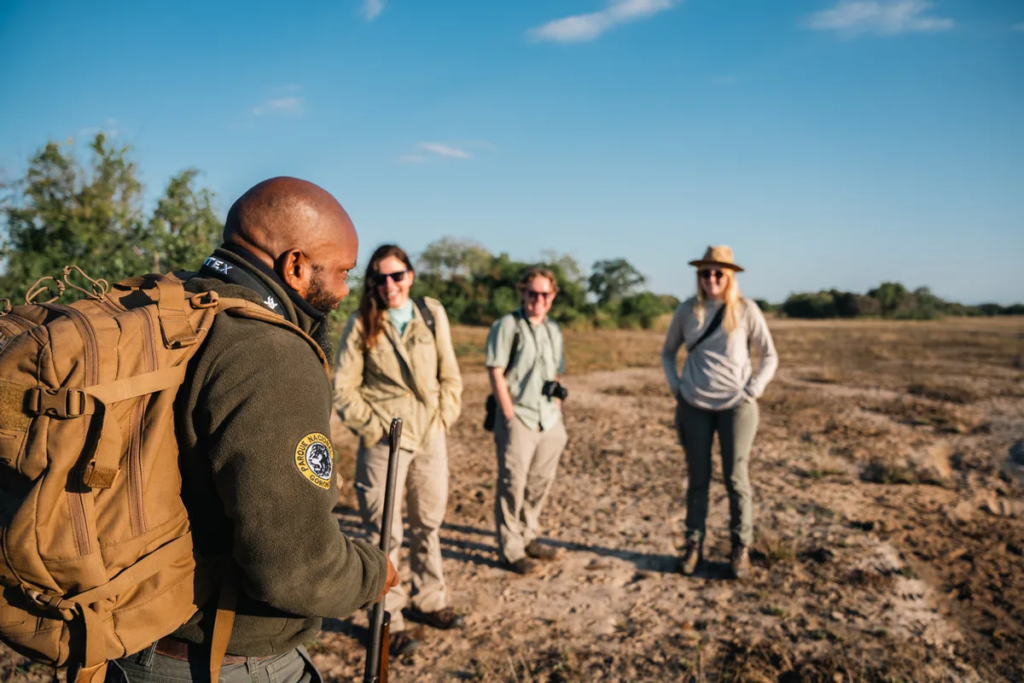
A trails guide leads guests on foot where elephant, buffalo, lion and rhino roam free, carrying a rifle as first or second gun. In South Africa you qualify through FGASA’s Trails Guide programme, which FGASA’s documents also call VPDA (Viewing Potentially Dangerous Animals): Advanced Rifle Handling, a theory exam, then at least 200 logged hours and 60 dangerous game encounters before a two-day practical. Ads call the stages back-up and lead trails.
We built this from FGASA’s current qualification rules, SANParks pages and vacancies, and recent ads. Where trails fit among the other levels, and what the courses cost, is in FGASA levels explained, so this piece goes into the logbook and the jobs.
Before your first hour counts
FGASA’s October 2025 rules say hours only count once the prerequisites are done. You need FGASA Nature Site Guide at NQF2 or NQF4, current FGASA membership, the trails manual and workbook, the brown FGASA Dangerous Game Logbook and a pass of 75% in the Trails Guide exam. You also need the Advanced Rifle Handling certificate, made up of three unit standards (117705, 119651 and 123519), and to be found competent at an FGASA ARH assessment, plus a valid first aid certificate. Carrying a rifle for work also means a SAPS competency certificate: one recent ad asked for competency with a manually operated rifle for business purposes.
The logbook, stage by stage
Every hour and encounter goes in the logbook and is signed by an approved mentor. FGASA counts encounters in eight categories: elephant bull, elephant breeding herd, buffalo bull, buffalo breeding herd, lion or leopard, black rhino, white rhino and hippo.
| Stage | Minimum hours | Minimum encounters | Who must be with you |
|---|---|---|---|
| Observer | 50 on trail | 10, from 3 categories | A qualified Trails Guide NQF4, Professional Trails Guide or dangerous game guide leading |
| Mentor check | 10, one on one | None set | An authorised FGASA Trails Guide Mentor; passing makes you an Apprentice Trails Guide |
| Mentored guiding | 100, including at least 30 as first rifle | 40, covering 7 of the 8 categories | An endorsed mentor as the responsible guide |
| Workplace hours | 50 as first rifle | 10, from 3 categories | A qualified back-up rifle, on walks with paying guests, not training walks |
| Practical assessment | At least 2 full days, 10 hours on foot | At least 2, of 2 categories | An authorised assessor, in an area with at least 4 categories of free-roaming dangerous game |
The certificate reads VPDA NQF2 or NQF4, matching your site guide level, and NQF4 also needs a Tracker 1 certificate in Track and Sign and Trailing, which our tracker article explains. Until you qualify, FGASA’s apprentice rules say you cannot run a dangerous game walk without a qualified trails guide present.
The rifle has to stay current. Before an ARH requalification, you must show one signed practice target for every six months since your certificate, each with five shots in a row at 12 metres, and the assessment starts with a rifle and ammunition check and a blindfold quick-loading drill. If that part fails, the assessment stops.
The hours that don’t count
The signature matters as much as the walk. Cruz Gumede, who went from tracker at Lion Sands to guide and then trails guide, wrote that he walked many hours with experienced guides who could not sign off his logbook because they lacked the right qualifications. Before you walk as an observer or second rifle, ask whether the lead guide is an authorised FGASA mentor for that stage.
What the ads ask for
| Post | Trails requirement | Other details |
|---|---|---|
| Field guide, Wild Dreams lodge, 2026 | Apprentice Trails (VPDA) or higher, NQF2 | SAPS rifle competency, first aid, PrDP; R7,500 a month to start, negotiable; team of 12 to 15 guides |
| Trails guide, Wild Dreams Hospitality, Eastern Cape, May 2026 | Valid ARH, rifle competency “essential” | Tourist guide registration, first aid, PrDP; 6 weeks on, 2 off; medical aid and provident fund contributions |
| Field guide, luxury lodge, Kalahari, closing June 2026 | Lead Trails Guide | Level 2 and 2 to 5 years; R15,000 to R17,500 a month; live-in |
| Head Guide, Olifants Rest Camp, SANParks, closing 4 Nov 2026 | VPDA at NQF4 and the three ARH unit standards | Paterson grade C3; NQF6 in conservation or similar; First Aid Level 3, preferably wilderness based; C1 licence and PrDP; keeps the firearm register and daily trail diary |
The Eastern Cape ad pitched itself at a qualified guide who wants to build up trails qualifications, which is how many people log their workplace hours.
Where walking is the main event
In Kruger, SANParks runs seven wilderness trails: Bushman, Mathikithi, Napi, Nyalaland, Olifants, Sweni and Wolhuter. Each runs for three nights with up to eight walkers aged 12 to 65, and SANParks tells guests they depend on the trail ranger for their safety. Its backpacking trails go further: the Olifants Trail covers about 42 km over four days, led by a qualified, armed field guide with a second armed guide. In the private reserves, Africa on Foot in the Klaserie, which is unfenced to Kruger, offers Big Five walks every morning.
Outside South Africa the licensing changes. In Botswana, the African Guide Academy’s trails course on the Kwapa River in the southern Okavango Delta lets students work towards FGASA back-up or lead trails or the Botswana Qualifications Authority’s own back-up and lead trails qualifications; the four-week course is listed at US$8,716 for 2026. A foreigner still needs a work and residence permit before Botswana will issue a guide licence. In Zambia, June 2026 ads for professional guides in Lower Zambezi National Park asked for a walking-level guiding licence recognised by Bedrock and TEVETA, a PSV driving licence and at least 5 years’ guiding. Permit rules for both countries are in our Botswana and Tanzania permits guide.
Does a trails ticket pay more?
No lodge we found publishes a separate trails allowance. The ads above show a gap between an apprentice trails guide starting at R7,500 and a lead trails guide on R15,000 to R17,500, but the second post also wanted NQF4 and up to 5 years’ experience, so the rifle is only part of the difference. Our field guide salary article sets out the wider pay picture, and trails posts are listed on our field guide jobs page.
This article sums up FGASA rules, SANParks pages and job ads as they stood in October 2026. Hour and encounter requirements, rifle rules and licences change, so check the current rules with FGASA, your mentor or the licensing authority before you start logging.
Sources
- FGASA, Trails Guide (VPDA) NQF2 and NQF4 (Oct 2025): fgasa.co.za
- FGASA, Trails Guide and Apprentice Trails Guide (2019): fgasa.co.za
- FGASA, Cruz Gumede’s path to trails guide (Feb 2025): fgasa.co.za
- Field guide, Wild Dreams lodge, Apprentice Trails, R7,500 (2026): remotive.com
- Trails guide, Wild Dreams Hospitality, Eastern Cape (May 2026): myjobmag.co.za
- Field guide, luxury lodge, Kalahari, Lead Trails (closing Jun 2026): careers24.com
- SANParks, Head Guide, Olifants Rest Camp (closing Nov 2026): sanparks.org
- SANParks, Kruger wilderness trails: sanparks.org
- SANParks, Kruger backpacking trails: sanparks.org
- Jenman Safaris, Africa on Foot listing: jenmansafaris.com
- Safari Frank, African Guide Academy trails course, Okavango (2026): safarifrank.com
- Government of Botswana, licence for professional guides: gov.bw
- Professional safari guide, Lower Zambezi (closing Jun 2026): gozambiajobs.com