
How to become a snake handler or reptile keeper in South Africa
Zoo reptile posts, snake removal and venom supply exist but are scarce: what the courses cost, which permits apply, and the one salary we found.
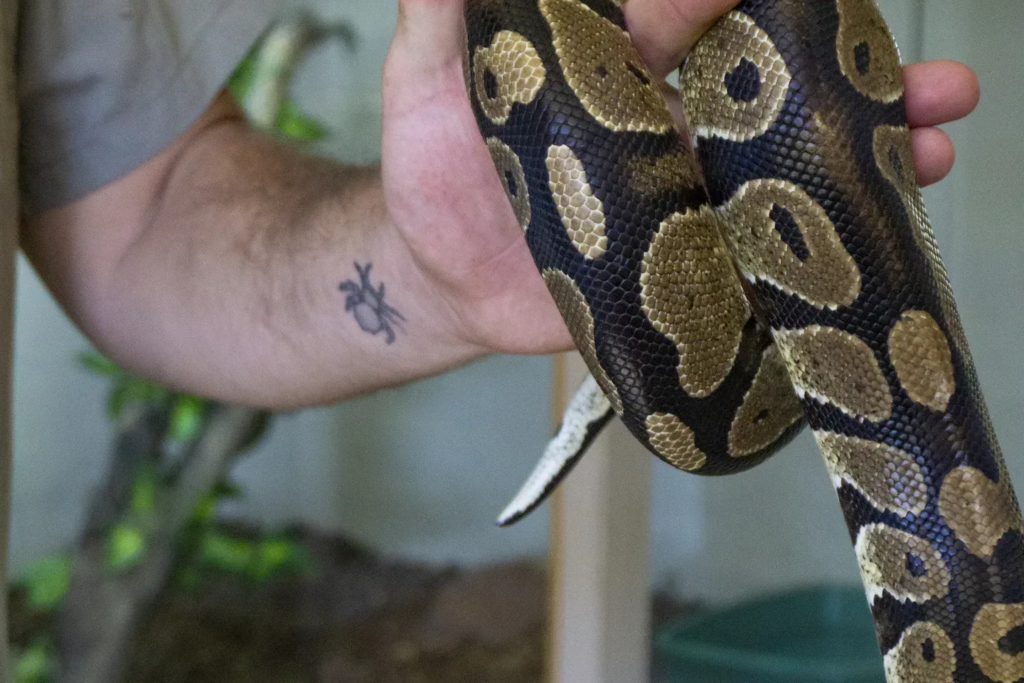
Paid reptile work in South Africa comes in three forms: keeping reptiles at zoos and reptile parks, removing snakes from homes and businesses, and supplying venom for antivenom. All three are small. The one reptile post we found with published pay, at the National Zoological Garden in Pretoria, paid R202,233 a year in 2024. Snake removal is mostly done by people who combine it with other work, such as security, conservation centres or teaching, and catching or keeping reptiles needs provincial permits.
Keeping reptiles at a zoo
The clearest job ads come from SANBI, which runs the National Zoological Garden. Its 2024 Animal Conservation Worker: Reptiles post in Pretoria covered animal care, cleaning and feeding, enrichment and conditioning training, breeding and capture, pest control and enclosure maintenance, with after-hours work when needed. It asked for Grade 12, a job-specific qualification and 4 years’ experience, or Grade 10 and 5 years. A Higher Certificate in Nature Conservation and a driving licence counted in your favour. The post was permanent at R202,233 a year.
An earlier SANBI ad, for an Animal Attendant at the zoo’s Reptile Park in 2018, is more specific about the hands-on side: caring for venomous and non-venomous reptiles, amphibians and invertebrates, handling venomous snakes and arachnids, breeding feeder animals and testing water. It asked for 6 to 12 months’ experience with captive reptiles and amphibians, rated an accredited venomous snake handling course as an advantage, and required allergy and TB tests and vaccinations.
We found no current ads from private reptile parks or crocodile centres. Crocworld Conservation Centre at Scottburgh on the KwaZulu-Natal South Coast shows how the work overlaps: it is a conservation centre that also answers snake removal call-outs.
Snake removal is usually a side role
Taking snakes out of homes and gardens is the most visible reptile work, and it is often done alongside another job. The African Snakebite Institute says a remover needs a catch-and-release permit from the nature conservation office in their province, valid for one year in most provinces. Removing a southern African python, Gaboon adder or Namaqua dwarf adder also needs a national TOPS permit. Removers are expected to log where each snake was caught and released and to photograph the release, and permit conditions can require the log to be handed to the provincial authority.
In February 2026 a reaction officer from Reaction Unit South Africa, a security company, caught two boomslangs in a garden in Parkgate, KwaZulu-Natal. The company holds an Ezemvelo KZN Wildlife permit that lets its officers capture, hold temporarily and release certain reptiles while on duty. The Institute keeps a directory of snake removers, and its courses carry CPD points for members of the pest control body PCIPC as well as for health workers.
Venom and antivenom
South African Vaccine Producers, a subsidiary of the National Health Laboratory Service, is the country’s only antivenom maker. Its products are SAIMR polyvalent antivenom, which covers 10 snake species, and boomslang and saw-scaled viper antivenoms. Antivenom is made by injecting horses with small doses of venom until they build up antibodies, a process that takes about nine months per horse. SAVP struggled to meet demand in 2023, stocks were critically low from mid-2024, and the NHLS restarted production at a renovated facility in September 2025, with a first batch of 536 polyvalent units.
SAVP does not publish details of a serpentarium or venom staff that we could find. One supplier does say it works for SAVP: African Reptiles & Venom says it supplies venom under contract, extracted from species including puff adder, Gaboon adder, the three mambas, Cape cobra, rinkhals and boomslang, then freeze-dried. Its founder says he has handled snakes since 1963, which gives a sense of the experience behind this work.
Courses and what they cost
The African Snakebite Institute runs the best-known training. Its Level 1 course, Snake Awareness, First Aid for Snakebite and Venomous Snake Handling, is a full day: about three hours of lectures on identification, behaviour and first aid, a multiple-choice test, then an optional 1.5 to 2 hours handling species such as puff adder, Cape cobra and boomslang. The Institute says it also covers the safe capture and relocation of venomous snakes.
| ASI Level 1 option (2026) | Price |
|---|---|
| Awareness and handling | R1,695 |
| Awareness only | R1,035 |
| Under 18, awareness and handling | R1,200 |
| Under 18, awareness only | R595 |
The minimum age is 12. The course earns 4 CPD points for HPCSA-registered health workers and one listing says it is FGASA endorsed; our FGASA levels explained covers the guiding qualifications. The Institute also lists a Level 2 Venomous Snake Handling Bootcamp and a Level 3 Advanced Snake Handling course, with Level 1 and 2 dates in the Western Cape and Gauteng from 30 October to 1 November 2026, but its site does not show prices for the higher levels. A course certificate is not a permit: you still need the provincial paperwork below.
Permits by province
Each province sets its own rules for keeping and moving reptiles, and the national TOPS rules sit on top.
| Authority | What the law or authority says |
|---|---|
| CapeNature, Western Cape | Captivity permit needed for any wild animal other than unprotected birds; R150 admin fee; about 30 working days |
| Mpumalanga Nature Conservation Act, 1998 | Permit needed to establish or run a reptile park or snake park (s40) and to keep live game (s29) |
| Northern Cape Nature Conservation Act, 2009 | Permit needed to keep any wild animal in captivity, except listed pet species (s17), and to run zoological, educational or rehabilitation facilities (s27) |
| Ezemvelo KZN Wildlife | Issues permits for capturing, holding and releasing reptiles, as in the Parkgate example |
| DFFE, national TOPS rules | Permits for restricted activities with listed species; registration for exhibition and rehabilitation facilities; fines up to R5 million |
The penalties are real. In July 2026 a Cape Town couple were fined a combined R80,000 under the Western Cape’s 1974 conservation ordinance over 95 reptiles, including breaking permit conditions and giving false information on a permit application.
Safety and the antivenom gap
South Africa records about 4,000 snakebites a year and about 900 hospital admissions, and only around 3% of victims need antivenom, according to the African Snakebite Institute. For handlers, the shortage showed how thin the margin is: in April 2025 Crocworld suspended its snake removal call-outs to protect its team while antivenom was scarce. Employers screen for health as well, as SANBI’s allergy and TB testing shows.
Most people who make a living from reptiles mix them with something else. Teaching is the usual partner, which our environmental educator guide covers, and rescue centres hire across species, as in our falconry and bird control guide. Zoo and reserve posts appear on our conservation jobs page, and a free profile lets employers find you.
This article sums up job ads, course pages and provincial law as they stood in October 2026. It is not legal advice. Permit rules differ by province and change, so check with your provincial conservation authority before you catch, keep or move any reptile.
Sources
- SANBI, Animal Conservation Workers including Reptiles, NZG (Apr 2024): sanbi.org
- SANBI, Animal Attendant: Reptile Park, NZG (Oct 2018): sanbi.org
- IOL Saturday Star, Crocworld suspends snake call-outs (Apr 2025): iol.co.za
- African Snakebite Institute, catching and releasing snakes (Apr 2023): africansnakebiteinstitute.com
- Arrive Alive, boomslangs captured in Parkgate, KZN (Feb 2026): arrivealive.co.za
- Daily Maverick/Spotlight, how antivenom is made and the SAVP (Sep 2024): dailymaverick.co.za
- SAnews, NHLS resumes antivenom production (Sep 2025): sanews.gov.za
- CapeNature, NHLS resumes snake antivenom production (Oct 2025): capenature.co.za
- African Reptiles & Venom, about us: africanreptiles-venom.co.za
- African Snakebite Institute, courses: africansnakebiteinstitute.com
- African Snakebite Institute, Level 1 course, Springbok (Oct 2026): africansnakebiteinstitute.com
- African Snakebite Institute, course details and FGASA endorsement: africansnakebiteinstitute.com
- CapeNature, permits for wild animals in captivity: capenature.co.za
- Mpumalanga Nature Conservation Act 10 of 1998: lawlibrary.org.za
- Northern Cape Nature Conservation Act 9 of 2009: lawlibrary.org.za
- DFFE, TOPS permits and registration: dffe.gov.za
- IOL Cape Argus, couple fined over 95 reptiles (Aug 2026): iol.co.za