Falconry and bird control jobs in southern Africa
Raptor patrols for pest birds, rehabilitation centres and airport wildlife teams all exist, but jobs are few and falconry needs a permit and an apprenticeship.
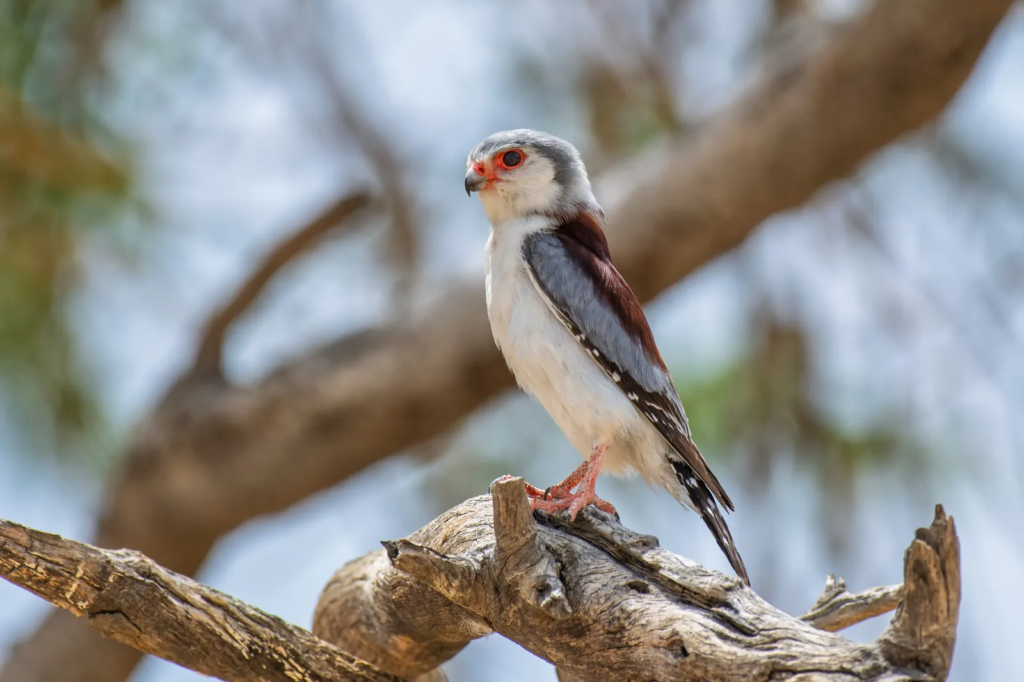
Paid work with birds of prey in southern Africa is a small field with three parts. Bird abatement firms fly trained hawks and falcons to move pest birds off buildings, golf courses and farms. Rehabilitation centres treat injured raptors and fly them in public displays. Airport wildlife control sits at the edge: in South Africa it mostly uses dogs, pyrotechnics and shooting, not falcons. No employer we found publishes pay, we found no advertised falconry posts, and the people doing the work are experienced falconers first. Becoming one takes a permit, a club and an apprenticeship.
Raptor patrols for hire
Avian Pest Solutions lists “raptor patrols” as its lead service, alongside humane trapping and, as a last resort, culling. It says it works in the Free State, Gauteng and the Cape, and pitches the patrols at birds damaging buildings, roofs, machinery, ventilation and air-conditioning units. Its team page lists falconers with between 19 and more than 45 years of falconry behind them, one with 16 years in bird abatement and over 23 years of raptor rehabilitation work with CapeNature.
The Western Cape has the longest public record of this work. A 2015 University of Cape Town study flew a Harris hawk from golf buggies at Rondebosch Golf Club for nine weeks to move Egyptian geese, using falconers from Raptor Force (Pty). In 2017 the Sunday Times reported that Falcon Bird Pest Control was flying a falcon against Egyptian geese at Pearl Valley Golf Estate near Paarl, with the income going to Eagle Encounters, the rehabilitation centre at Spier. The estate had about 1,000 geese before the hunting began; on one patrol the handler counted four breeding pairs.
Farms use falcons too. In 2016 Botswana’s Daily News reported that farmers in Pandamatenga were using trained lanner and peregrine falcons to chase quelea, which had caused 60 to 90% crop damage in 2013. The pilot was approved for the whole farming area. If northern Botswana appeals, our Botswana jobs page lists current posts there.
None of these firms advertised a vacancy that we could find. The way in is through falconry itself, then through the people who already do the work.
Airports lean on dogs and radar
Airport bird control is regulated, and the rules come from aviation, not conservation. The South African Civil Aviation Authority bases its aerodrome rules, Part 139, on ICAO Annex 14. Aerodromes in Categories 4 to 9 must run a Wildlife Hazard Management Programme, and submit it to SACAA, and the programme should cover roughly a 13 km radius around the airport. It has to assign people to daily wildlife control and train them. In SACAA’s 2022 presentation to ICAO, the methods listed were wing shooters for annual culls and working dogs; falconry was not mentioned. SACAA recorded 395 wildlife strikes in 2018 and 357 in 2019.
King Shaka International in Durban shows the mix: border collie bird control dogs, pyrotechnics, lasers and swallow detection radar. In May 2026 AIN reported a Robin Radar avian radar at the airport, aimed at the roughly 3 million barn swallows that roost at nearby Mount Moreland each evening from September to early March. In 2018 Airports Company South Africa partnered with the Endangered Wildlife Trust on a national bird control programme, and that report listed trained birds of prey as one possible scaring method. Airport wildlife jobs exist, but falconry is not what the regulator’s material asks for.
Rehabilitation centres and flying displays
Most raptor work on public view happens at rehabilitation centres. Dullstroom and the Owl Orphanage both say they run on entry fees, sponsorship or donations.
| Centre | Where | What it does |
|---|---|---|
| Dullstroom Bird of Prey and Rehabilitation Centre | R540, Dullstroom, Mpumalanga | Running since 1997; daily flying demonstrations; rehabilitation; run by a team of three |
| Vulpro | Hartbeespoort, Eastern Cape and Shamwari | Vulture rescue, rehabilitation, breeding and tracking; the team page lists about 19 people |
| African Raptor Centre | Tala Collection Game Reserve, KwaZulu-Natal | Raptor Rescue unit for injured and orphaned raptors, and a bird park |
| The Owl Orphanage | Near Velddrif, Western Cape | The only SPCA-accredited raptor rehabilitation centre in the province; 457 birds treated in 2024 |
| Eagle Encounters | Spier, Stellenbosch | Rehabilitation and education; about 130 birds on site in 2017 |
Vulpro’s team page gives a sense of the roles: facility assistants, a bird assistant for breeding and tracking, a front line assistant, an education and outreach intern, a driver and an operations manager. The qualifications listed there include a National Diploma in Nature Conservation, a BSc Honours in ecology and an MSc in Wildlife Management. Dullstroom presents its flying as a welfare need for the birds and a teaching tool, so display work is as much presenting as handling; our environmental educator article covers that side.
Centres that work with nationally listed threatened or protected species also carry national paperwork. Under the TOPS rules, rehabilitation facilities and commercial exhibition facilities handling listed species must register, and fines for offences run up to R5 million.
The falconer’s permit and the club
Falconry is regulated by the provinces, and the rules differ. The Northern Cape Nature Conservation Act of 2009 is the plainest example: section 27(1) says no person may act as a falconer without a permit, and the same applies to anyone training falconers. The Act lets the Director set theory or practical examinations. In the Western Cape, CapeNature only requires a captivity permit for bird species listed as protected or endangered under the provincial ordinance; the administration fee is R150 and processing takes up to 30 working days.
The clubs carry the training. The South African Falconry Association lists eight provincial clubs: Mpumalanga, Eastern Cape, Cape, Natal, North Eastern (Limpopo), North West, Transvaal and Free State. It credits the Cape Falconry Club with getting falconry legalised in the Cape and with the permits that allow wild birds to be taken for falconry. The UCT study described its falconers as having served an apprenticeship and earned a grading approved by the Cape Falconry Club under CapeNature and SAFA. We could not find an official source for how long the apprenticeship lasts or what the grades are called, so ask your provincial club and your conservation authority before you buy equipment or a bird.
Turning a hobby into pay
No abatement firm, centre or airport we found publishes pay for raptor work. The routes that show up are a rehabilitation centre post or internship, display presenting, or joining an abatement team once you hold your own grading. If you want hands-on time first, check our ethical volunteering listings, and watch the conservation jobs page for centre posts. For other animal-handling work, see our reptile keeper and snake handler guide.
This article sums up company pages, published reports and provincial law as they stood in October 2026. It is not legal advice. Falconry permits differ by province and change, so confirm the rules with your provincial conservation authority and club.
Sources
- Avian Pest Solutions, services: avianpest.co.za
- Avian Pest Solutions, team: avianpest.co.za
- University of Cape Town, falconry and Egyptian geese on golf courses (2015): open.uct.ac.za
- Sunday Times, falcons as pest control (Mar 2017): timeslive.co.za
- Daily News Botswana, falcons against quelea in Pandamatenga (Feb 2016): dailynews.gov.bw
- SACAA, South Africa wildlife hazard programme, ICAO workshop (Jul 2022): icao.int
- Kruger Park Times, bird control dogs at King Shaka: krugerpark.co.za
- AIN, avian radar at King Shaka International (May 2026): ainonline.com
- Flightline Weekly, bird control at SA airports (Nov 2018): flightlineweekly.com
- Dullstroom Bird of Prey and Rehabilitation Centre: dullstroom.co.za
- Vulpro, team: vulpro.com
- African Raptor Centre: africanraptor.co.za
- Africanews, the Owl Orphanage (Apr 2025): africanews.com
- DFFE, TOPS permits and registration: dffe.gov.za
- Northern Cape Nature Conservation Act 9 of 2009: lawlibrary.org.za
- CapeNature, permits for wild animals in captivity: capenature.co.za
- South African Falconry Association, provincial clubs: safalconry.co.za