
Safari jobs for foreigners: which roles non-citizens can get
Most countries in the region make lodges show no citizen can do the job, so foreigners mostly land senior, specialist and technical posts.
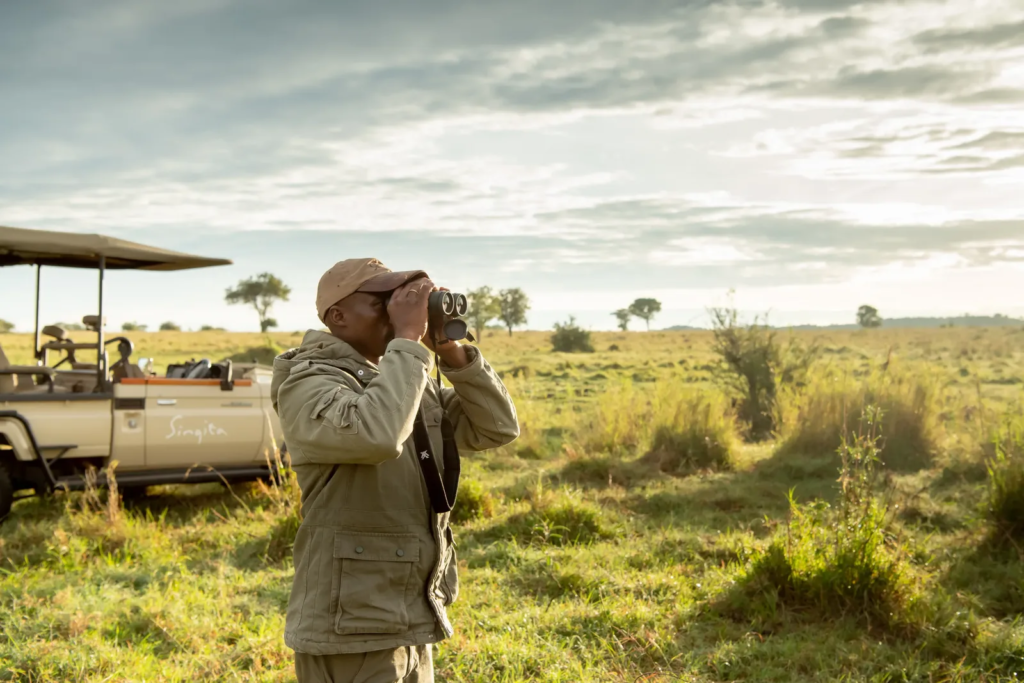
Foreigners can get safari jobs in southern and East Africa, but mostly senior, specialist and technical ones: general managers, executive and pastry chefs, engineers, ecologists and environmental managers. Junior lodge work is usually filled locally, and in Tanzania and, in practice, Zimbabwe, guiding is closed to non-citizens. The reason is the permit system. Nearly every country makes the employer show that no qualified citizen was available, name a local understudy, or both, and South Africa scores applicants on salary and qualifications instead. A lodge will only do that paperwork for a post it cannot fill at home.
We drew this from our ten country permit guides, which cite the immigration and tourism authorities, and from job ads and application forms published in 2025 and 2026.
Country by country
| Country | What the employer must show | Guiding as a foreigner | Volunteering |
|---|---|---|---|
| South Africa | No labour test since October 2024, but you need 100 points and a salary under R650,976 a year earns none | Allowed with a work visa that covers guiding and tourist guide registration | Volunteer visitor’s visa for non-profits, over 90 days |
| Namibia | Local newspaper advert, CVs of Namibians turned down, training report at each renewal | No citizens-only rule found; employment permit needed | Any volunteering needs an employment permit or work visa |
| Botswana | A board weighs the effect on citizen jobs and the plan to train a citizen replacement | Permits first, then a guide licence at BWP 1,500 a year for non-citizens against BWP 100 to 200 for citizens | Labour waiver and volunteer offer letter |
| Tanzania | Every effort to find a Tanzanian, a succession plan, about 10 Tanzanians per foreigner for non-investors | Reserved for Tanzanian citizens by law | C-5 volunteer residence permit, US$200 |
| Zimbabwe | Local advert, shortlisted CVs and a named understudy at every extension; five years at most | Learner exam requires citizenship or permanent residence | Temporary employment permit |
| Zambia | Adverts in two newspapers and a succession plan with a Zambian understudy | Guide’s permit goes to people who ordinarily reside in Zambia | Same employment permit, lower NGO fee |
| Mozambique | Foreign staff quota of 5% to 15% by company size; beyond it, proof no qualified Mozambican exists | Hunter-guides licensed, foreigners included; no rules found for photographic guides | No published rule |
| Kenya | Named Kenyan understudy, proof the job could not be filled locally, tourism regulator approval | Separate non-citizen guide licence from the Tourism Regulatory Authority | Unclear; ask the host in writing |
| Uganda | Evidence of local recruitment, per law firm guides; US$2,500 for 12 months | Licence from the Uganda Tourism Board, which asks for your work permit number | G1 permit for NGO volunteers |
| Rwanda | A Rwandan understudy or a two-week local advert; law firms differ | Rwanda Development Board licence; no citizens-only rule found | P1 permit needs a government or international partner |
| Madagascar | Labour Code sets no quota or local test; fees unpublished | National park guides are licensed local guides; no route found for foreigners | Long-stay transformable visa |
Why the junior jobs stay local
The local-first tests make an entry-level post the hardest case to argue: an employer cannot credibly say no citizen can work a laundry or a front desk. South Africa reaches the same result through money. A head guide on R20,000 a month, the top of the range in our field guide salary research, earns R240,000 a year, far below the R650,976 where salary points start, and without them the best possible total is 90 of the 100 points needed. A job offer from an employer in the Trusted Employer Scheme, worth 30 points, or an occupation on the critical skills list changes that sum.
One employer’s own figures point the same way. African Parks says 97% of its employees are nationals of the African countries where it works.
What the ads say
Many ads spell the rule out. Wildlife ACT’s priority species monitor post in KwaZulu-Natal says applicants must be South African citizens. andBeyond’s YES4Youth administrator post in March 2026 was for South African citizens aged 27 or under, and its Inkwazi ranger course, required for its South African guides, takes citizens and permanent residents only. Its South African ads also give preference to designated groups under its employment equity plan. In Tanzania, an Asilia guide ad in 2024 asked for “a Tanzanian Guide”.
Others leave a door open. Singita’s October 2026 landkeeper post in the Okavango Delta asked for “Botswana citizenship or a valid work permit”. A recruiter’s duty manager ad in Mpumalanga asked for “Nationality or valid working visa”, and a Kenya lodge manager ad in March 2026 gave preference to South Africans and Kenyans. Wilderness’s CV form asks you to choose between being a citizen or permanent resident, holding a work visa for the country, or needing sponsorship. Answer it truthfully: it tells the employer at the first step whether it would have to sponsor you.
Guide licences add a second gate
A work permit is not enough to guide. South Africa requires registration with a provincial registrar and a work visa that permits guiding. Kenya licenses non-citizen guides as a separate category, Uganda and Rwanda license every guide, and Botswana charges non-citizens BWP 1,500 a year for a professional guide licence once the permits are in place. Zambia ties its guide’s permit to ordinary residence in Zambia, Zimbabwe’s learner exam is for citizens and permanent residents, and Tanzania reserves guiding for its own citizens, with a July 2025 order setting fines of at least TZS 10 million. If you trained abroad, check how your qualification is treated before you apply; FGASA levels explained covers the South African system.
Volunteering is not a way round the permit
Volunteer visas exist, but they are narrow. South Africa’s volunteer visitor’s visa is for unpaid work with a bona fide non-profit, and any payment means you need a work visa. Namibia and Zimbabwe treat volunteering as work that needs a permit. Rwanda’s P1 and Uganda’s G1 are built around registered organisations and government partners, not private lodges. Ask the host in writing which visa it uses before you pay anything; our volunteering listings show current placements.
Improving your odds
Aim at posts the permit rules favour: senior management, specialist kitchens, engineering and maintenance management, ecology and environmental management, and sales roles that need a skill, such as a language, that is hard to find locally. andBeyond’s Botswana back of house manager ad, for example, asked for an engineering diploma and 10 years in a similar role. Get your qualifications evaluated where the system asks for it: SAQA in South Africa, the Botswana Qualifications Authority in Botswana. Expect to train an understudy, and treat that as part of the job rather than a threat to it.
East Africans have an edge inside the East African Community. Kenya issues Class R permits to EAC citizens free, Rwanda charges EAC citizens no resident permit fee, and Uganda exempts Kenyans and Rwandans from immigration fees, though all still need the permit itself. Wherever you are from, ask the employer who files the permit and pays for it before you resign from anything, and do not start work, paid or unpaid, until it is approved. To let employers who do sponsor find you, post a free profile and say plainly which permits you hold.
This is a plain-language summary of permit rules and job ads as they stood in October 2026, not legal or immigration advice. Rules, fees and ads change, so check the official sources below, our country permit guides, or the employer before you apply.
Sources
- South Africa, points-based system, GN 5448 of 2024 (Oct 2024): lawlibrary.org.za
- South Africa, general work visa checklist, SA Consulate Toronto (Apr 2026): dirco.gov.za
- South Africa, volunteer visitor visa, SA High Commission Canberra (Jan 2026): dirco.gov.za
- South Africa, Department of Tourism, how to become a registered tourist guide (Nov 2022): twk.gov.za
- Namibia, employment permit requirements and fees, MHAISS (undated): mha.gov.na
- Namibia, fees and requirements, Namibia High Commission London (undated): namibiahc.org.uk
- Botswana, work permit application: gov.bw
- Botswana, employment visa and volunteer documents: gov.bw
- Botswana, professional guide licence: gov.bw
- Tanzania, residence permit guidelines and fees: immigration.go.tz
- Tanzania, Non-Citizens (Employment Regulation) Act, as amended: tanzlii.org
- Tanzania, Tour Guides Regulations 2015: tanzlii.org
- Zimbabwe, temporary employment permit requirements, Department of Immigration (Apr 2025): zimimmigration.gov.zw
- Zimbabwe, licensing, ZimParks (2024): zimparks.org.zw
- Zimbabwe, entry requirements and volunteering, UK FCDO (Jul 2026): gov.uk
- Zambia, permit types and requirements, Department of Immigration (accessed Oct 2026): zambiaimmigration.gov.zm
- Zambia, Zambia Wildlife Act 2015: zambialii.org
- Mozambique, Decree 88/2024, Boletim da República (17 Dec 2024): archive.gazettes.africa
- Mozambique, Decree 52/2021, hunter-guide regulations, via FAOLEX: faolex.fao.org
- Kenya, Class D employment permit, Directorate of Immigration Services (accessed Oct 2026): immigration.go.ke
- Kenya, Tourism Regulatory Authority Regulations 2014: new.kenyalaw.org
- Kenya, Tourism Act 2011, Ninth Schedule: new.kenyalaw.org
- Uganda, entry permit classes and EAC fees, Directorate of Citizenship and Immigration Control (accessed Oct 2026): immigration.go.ug
- Uganda, Class G2 entry permit fees (accessed Oct 2026): immigration.go.ug
- Uganda, Tourism (Tour Guide) Regulations 2014: qasystem.utb.go.ug
- Rwanda, employment permit classes and fees, DGIE (accessed Oct 2026): migration.gov.rw
- Rwanda, other permits including P1, DGIE (accessed Oct 2026): migration.gov.rw
- Rwanda, Law No. 12ter/2014 Regulating the Tourism Industry: rwandalii.org
- Madagascar, Loi 2024-014 portant Code du travail (2024): assemblee-nationale.mg
- Madagascar, visas, Embassy of Madagascar in London (accessed Oct 2026): mdg-london.org
- EAC Secretariat, working in East Africa: eac.int
- Wildlife ACT, Priority Species Monitor vacancy (2026): wildlifeact.com
- andBeyond, YES4Youth Groups and Incentives Administrator (Mar 2026): myjobmag.co.za
- FGASA, andBeyond Inkwazi Ranger Training requirements: fgasa.co.za
- andBeyond, Back of House Manager, Botswana (Sep 2026): talentgenie.co.za
- Asilia, Junior Guide and Field Guide, Tanzania (Jan 2024): ajiriwa.net
- Singita, Landkeeper job profile, Okavango Delta (2026): ctfassets.net
- Bright Placements, Duty Manager, Mpumalanga (2026): careers24.com
- Lodge Manager, Kenya, recruiter ad (Mar 2026): talentgenie.co.za
- Wilderness, Submit CV form: wilderness.simplify.hr
- African Parks, careers portal and staff nationality: africanparks.simplify.hr